
Keep Mice Out Without an Exterminator: How a Pouch Filled With Volcanic Stone From a Small Sicilian Island Is Helping Families Protect Their Health and Their Home
Read this before the cold sets in. If you hear scratching inside the walls at night, find droppings in the pantry, or spotted a mouse running along the floor, what happens over the next few weeks matters more than you think.
When the nights start getting colder, mice start looking for a way inside. They want warmth, food and a safe place to raise their young. Your home has all three.
And the mouse you saw last month may not have been alone. House mice breed fast. A female can have a litter of around five or six pups, and those young mice can start breeding themselves within about six weeks.
How one mouse becomes a colony
- Early fallA pregnant female squeezes in through a gap smaller than a coin.
- A few weeks laterHer first litter is born inside your walls or attic.
- About 6 weeks onHer young are old enough to breed, and she is pregnant again.
- By mid-winterSeveral generations are breeding at the same time, out of sight.
This is not only unpleasant. The CDC warns that mice can spread diseases such as hantavirus, salmonella and leptospirosis through their urine, droppings and saliva. Children and pets spend the most time near the floor, so they are the most exposed.
Your house pays a price too. Mice chew through electrical wiring, tear up insulation to build nests, and leave urine stains in places you cannot reach. One chewed wire can mean an expensive repair, and signs of mice are a red flag for any home inspector or buyer.
Why traps and poison keep letting you down
Most mouse products only deal with the mice you can see. Meanwhile, the rest of the family keeps breeding behind the drywall.
- Snap traps catch one mouse at a time, and mice that are already well fed have little reason to go near the bait.
- Poison can leave mice dying inside your walls, where you cannot reach them, and it is a real risk around kids and pets.
- Ultrasonic plug-ins are popular, but the FTC has warned sellers about making claims these devices cannot back up.
- Sealing every gap sounds simple, but a mouse can fit through an opening about the size of a dime.
The real problem: your home smells safe to them
Mice move by smell. They leave scent trails along walls, cupboards and pipes, and those trails tell other mice that your home is a safe place with food and shelter.
As long as your house smells warm, quiet and full of food, new mice will keep finding their way in, no matter how many you catch. To fix the problem, you have to change what your home smells like to a mouse.
If you keep a clean home and still have mice, this is not your fault. Mice are drawn to warmth and food, and every home has both.
Meet Retili: a plant-powered scent barrier in a pouch
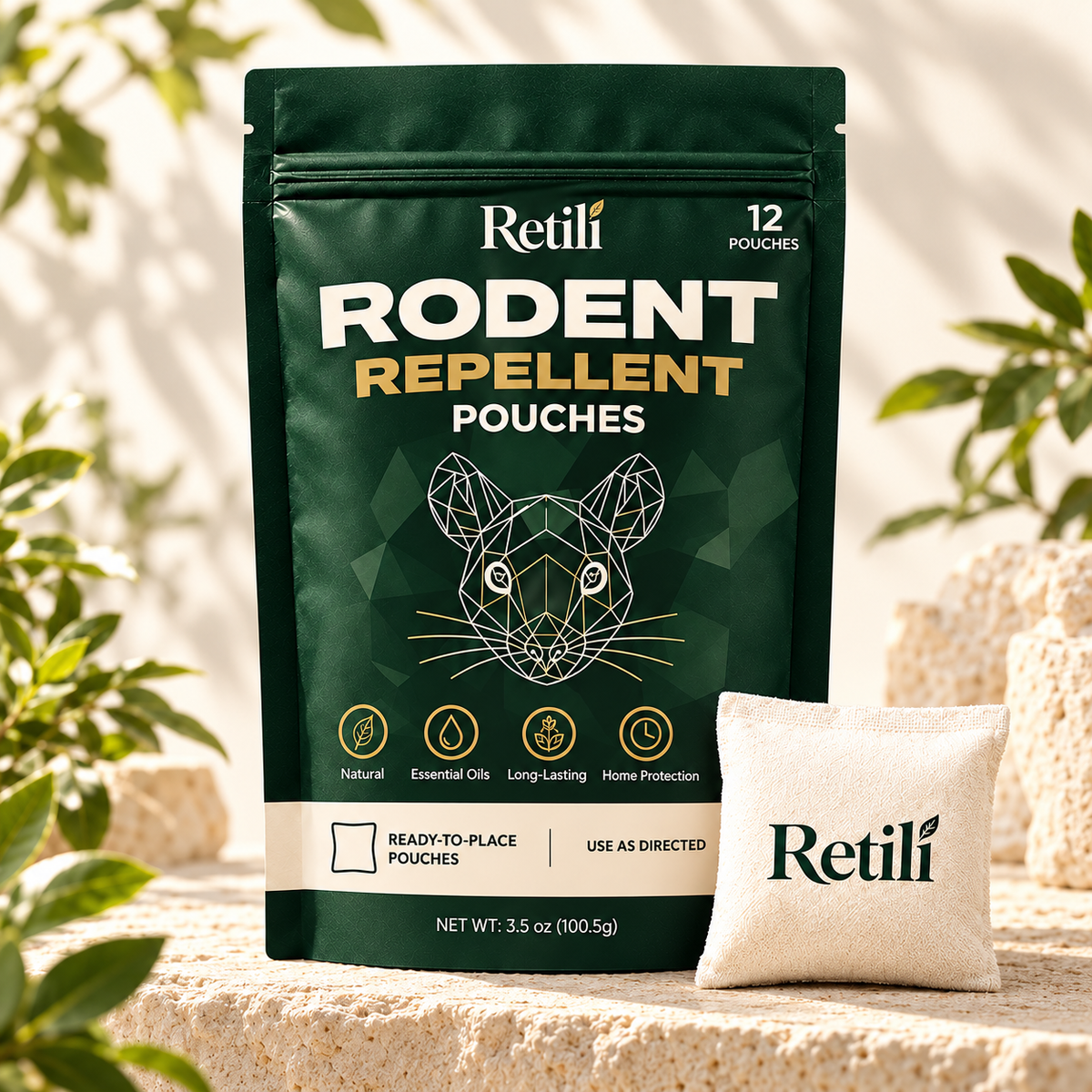
Retili pouches work on a simple idea. A mouse's sense of smell is far more sensitive than ours, so Retili fills the space with natural scents that mice find overwhelming. Your pantry, garage or attic stops smelling like a safe place to live, and the mice move on by themselves.
There are no traps to check, no poison and nothing to clean up afterwards. The scent also covers up the trails that tell new mice your home is a good place to settle.
What makes Retili different: the stone inside
Many repellent pouches use a corn or grain filler to hold the oils. The trouble is that these fillers dry out, the scent fades, and the filler itself can end up as food for the very mice you are trying to keep away.
Retili uses something better: Lipari pumice.
What is Lipari pumice?
Lipari is a small volcanic island off the north coast of Sicily, in southern Italy. It belongs to the Aeolian Islands in the Mediterranean, and it has been known for centuries for its light, bright pumice stone.
Pumice forms when lava full of gas cools very quickly. The gas leaves behind thousands of tiny pores, which makes the stone so light it can float on water.
Those pores are what make Lipari pumice so useful in a Retili pouch. They soak up the essential oils like a sponge and let them out a little at a time, so the scent barrier keeps working for weeks instead of drying out. And unlike corn filler, mice cannot eat a stone.
What is inside every pouch
- Repels mice without killing them
- No traps, no poison, nothing to clean up
- Up to 90 days of protection per pouch
- Fresh herbal scent for people, overwhelming for mice
- Safe around kids and pets when used as directed
Where to place your pouches
Mice look for warm, dark, enclosed spaces. Put a pouch anywhere you have seen droppings, heard scratching or suspect an entry point.
- Pantry and kitchen cupboards
- Under the sink and behind the fridge or stove
- Garage, basement and crawl space
- Attic access points and storage closets
- Sheds, barns and workshops
- RVs, campers and stored vehicles
Three simple steps
- PlacePut pouches where you have seen signs of mice. Use more than one pouch in each problem area for the best results.
- LeaveLet the scent barrier work around the clock. There is nothing to bait, reset or empty.
- ReplaceSwap in fresh pouches every 90 days to keep the barrier strong.
| Snap traps | Catch one mouse at a time and need constant checking |
|---|---|
| Poison | Mice can die inside the walls, and it is risky around kids and pets |
| Ultrasonic devices | Results are disputed and many homeowners see no change |
| Exterminator visits | Expensive and often need to be repeated |
| Retili pouches | Natural scent barrier, no cleanup, up to 90 days per pouch |
What Retili customers are saying
Review headline
Paste a real customer review here.
Customer name · City, State · Verified buyerReview headline
Paste a real customer review here.
Customer name · City, State · Verified buyerReview headline
Paste a real customer review here.
Customer name · City, State · Verified buyerHow to get the best results at the best price
For most homes, one pouch is not enough. Mice use several rooms and hiding spots, so the best results come from treating every problem area at once. That is why most customers choose a multi-pack.
Retili is currently available at a reduced price, with free shipping. You can pick the pack size that fits your home on the next page.

Retili Repellent Pouches
- Natural scent barrier with Lipari pumice
- Up to 90 days of protection per pouch
- No traps, no poison, no cleanup
- Free shipping
- 90-day money-back guarantee
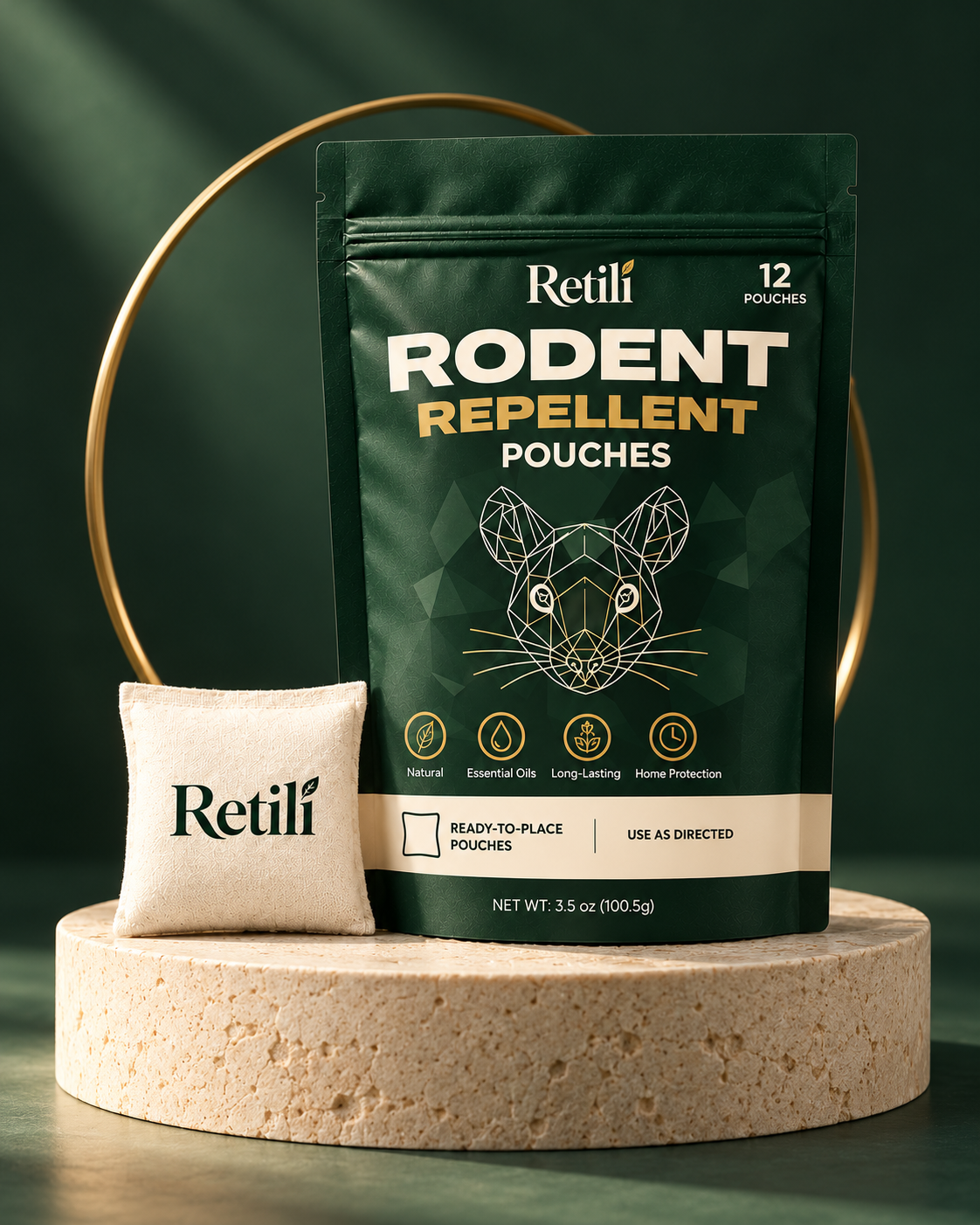
Try Retili risk-free for 90 days. If you are not happy with the results, contact support@retili.com within 90 days of receiving your order and we will help you get a refund. See our Refund Policy for full details.
Frequently asked questions
How does Retili work?
Each pouch holds Lipari pumice, a porous volcanic stone from a small island off Sicily, soaked in peppermint, cinnamon and cedarwood oils with a little castor oil. The pumice releases the scent slowly, creating a barrier that mice find overwhelming, so they leave the area instead of settling in.
Is Retili safe around kids and pets?
Retili is made with plant-based oils and contains no poison. Use the pouches as directed and keep them out of reach of children and pets, as you would with any household product.
How soon will I see results?
Retili is designed to start working within 72 hours. Activity usually drops gradually as mice avoid the treated areas. Results depend on how many mice you have, how many pouches you use and where you place them.
How long does each pouch last?
Each pouch provides up to 90 days of protection. Replace it after 90 days to keep the scent barrier strong. Heat, airflow and placement can affect how long the scent lasts.
Why not just use peppermint oil from the store?
Cotton balls with peppermint oil dry out within hours, and a single scent is easier for mice to get used to. Retili combines several oils and stores them in Lipari pumice, which releases them slowly over weeks.
What if it does not work for me?
Every order comes with a 90-day money-back guarantee. Email support@retili.com within 90 days of receiving your order to request a refund.
THIS IS AN ADVERTISEMENT AND NOT A NEWS ARTICLE. This page is owned and operated by Retili. The story on this page is an illustrative dramatization. Results vary depending on the size of the space, the number of pouches, how long mice have been present and other conditions. Use as directed.